All You Need To Know About Inverters?
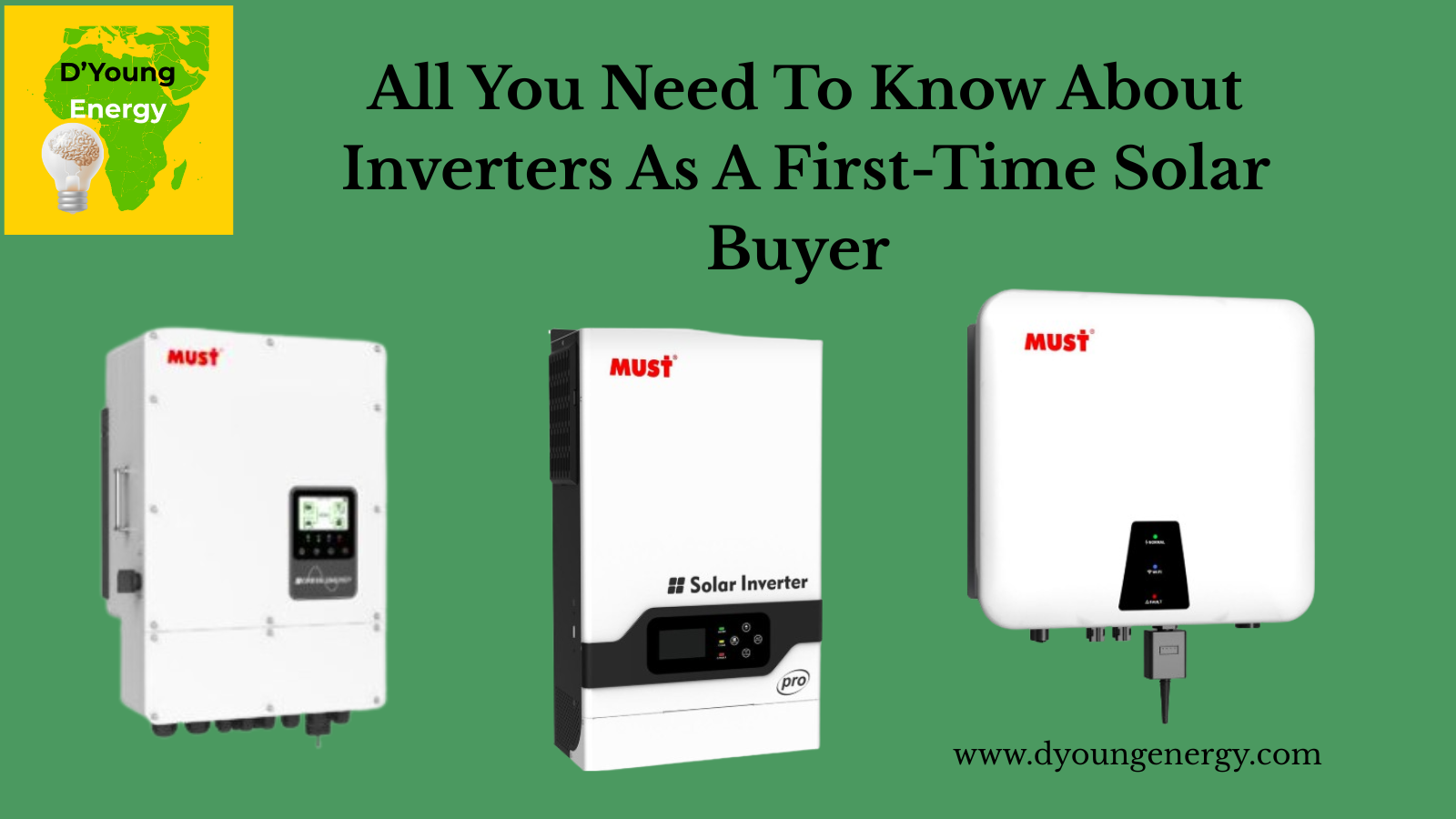
Think of the inverter as “the heart of your solar system.”
Your solar panels produce electricity in a form called DC (Direct Current), but most home appliances in Nigeria use AC (Alternating Current) electricity. This means:
- Your TV uses AC
- Your fan uses AC
- Your freezer uses AC
- Your pumping machine uses AC
- Your air conditioner uses AC
So the inverter’s main job is simple: It converts the DC electricity coming from your batteries or solar panels into usable AC electricity for your home.
Therefore, an inverter is an electrical device that converts direct current (DC) to alternating current (AC). Inverters have an input side and an output side. On the input side, the inverter is connected to the DC power source of the battery or solar array, while the output side supplies AC power to the load (appliances), usually between 220 and 240V.
The system voltage is the input voltage and is usually graduated in steps of 12V (12V, 24V, 48V, 60V, etc.). Without an inverter, your solar system cannot properly power most household appliances.
Why Inverters Are Important in Nigeria
In countries with stable electricity, people mostly use solar to reduce electricity bills, but in Nigeria, the inverter is more than just a converter. It helps families:
- reduce generator usage,
- escape fuel expenses,
- avoid noise pollution,
- protect appliances from unstable power,
- and enjoy uninterrupted electricity.
For many Nigerian homes, the inverter becomes the “light manager” of the house. When PHCN takes light, the inverter switches automatically to battery power.
How an Inverter Works in a Solar System
Here is all you need to know about inverter setup and how it works in a solar system.
Step 1 — Solar Panels
The panels collect sunlight. (Power is stored as DC.)
Step 2 — Charge Controller
The charge controller regulates the power going into the batteries. (Power is stored as DC.)
Step 3 — Batteries
The batteries store energy. (Power is stored as DC.)
Step 4 — Inverter
The inverter converts the stored DC power into AC power your home can use.
All You Need to Know about Inverter Types in Nigeria.
Many Nigerians buy solar without understanding inverter types. This leads to wrong purchases and disappointment.
Let’s simplify them.
1. Off-Grid Inverter (Most Common in Nigeria)
This is the most popular inverter type for Nigerian homes. It works with:
- solar panels,
- batteries,
- and generator backup.
It does not depend fully on the national grid.
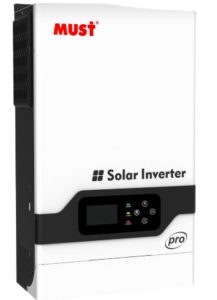
Best For:
- areas with poor electricity,
- estates with unstable power,
- homes that rely heavily on generators,
- rural communities.
- For people who experience blackouts daily, an off-grid inverter is usually the best option.
2. Hybrid Inverter (The Smart Modern Option)
Hybrid inverters are becoming very popular in Nigeria because of their flexibility. A hybrid inverter can:
- work with solar panels,
- charge batteries,
- use PHCN power,
- and even work with generators automatically.
Many modern Nigerian homes are switching to Hybrid inverters because
- Solar powers your home during the day
- Batteries power the house at night
- PHCN or generator supports the system when batteries are low
- Some hybrid inverters even allow remote monitoring from your phone.
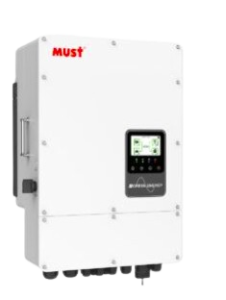
Best For:
- modern homes,
- businesses,
- offices,
- people upgrading gradually to solar.
3. Grid-Tied Inverters
These are common abroad but less common in Nigeria. They work directly with public electricity supply and usually don’t need batteries.
The challenge is Nigeria’s grid is not stable enough in many areas. So most Nigerians still prefer battery-based systems.
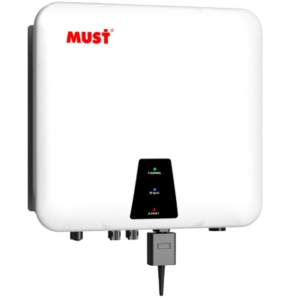
All You Need to Know About Inverter Output Waveforms.
This is where many first-time buyers get confused. There are three types of output waveforms found in most inverters.
Square Wave Inverters
They are the simplest and most basic type of inverters. It is useful in only a handful of applications, such as lightning. This option makes for the cheapest type of inverter.
Modified Sine Wave Inverter
They are the mid-point between the square wave and pure sine wave. Most household and small office equipment will run on this type of inverter. These are cheaper when compared to the pure sine wave inverter.
But they can cause problems such as
- buzzing sounds,
- overheating appliances,
- poor performance,
- damaging sensitive electronics over time.
Some TVs, laptops, refrigerators, and sound systems may not function properly.
Pure Sine Wave Inverter
This produces electricity similar to PHCN power, i.e., they give an output that is very similar to the output waveform from the electrical grid. You must use this type of inverter if there is any sensitive equipment connected to your system. This is the most expensive type of inverter.
It is safer for: TVs, laptops, refrigerators, fans, medical equipment, and office electronics.
For Nigerian homes, especially with expensive appliances, pure sine wave inverters are the better long-term investment.
All You Need to Know About Inverter Sizing.
Choosing the right inverter is not about buying the biggest or cheapest option available, it is about choosing a system that matches your energy needs. In Nigeria, where power supply varies from one location to another, a proper load analysis helps you avoid common problems like overload, frequent shutdowns, battery failure, and costly inverter damage.
Before investing in any solar system, ensure an experienced Energy Auditor evaluates your appliances, power consumption, and daily energy usage. A well-sized inverter gives you better performance, longer system lifespan, and reliable electricity for your home or business.
At D’Young Energy, we help homes and businesses carry out professional energy audits and design the right solar solution for their needs. Reach out to us today for your Energy Audit service, call +2347037179294