When most Nigerians hear “solar system,” the first thing that comes to mind is the solar panel.
Those shiny panels on rooftops are often the most visible part of a solar installation. But many first-time solar buyers still don’t understand the different types of solar panels for Nigerian homes and what to look out for when buying a solar panel.
This guide breaks everything down in a simple way that homeowners, business owners, and beginners across Nigeria and Africa can easily understand.
What Is a Solar Panel?
A solar panel is a device that converts sunlight into electricity. It is the electricity-generating component of the system. It is also refer to as the PV module, which is the smallest complete assembly of solar cells that are connected in series and sealed from environmental degradation. PV modules are rated in terms of their power output under standard test conditions (STC) Solar panel sizes commonly range from 5Wp to 550Wp. Inside every solar panel are solar cells made mainly from silicon. When sunlight hits the cells, electricity is generated.
That electricity is then sent to the batteries for storage, an inverter for conversion, and finally to your home appliances. Without solar panels, your solar system cannot generate energy.
Why Solar Panels Are Becoming Popular in Nigeria
Solar panels are growing fast in Nigeria because many homes and businesses are tired of:
- high fuel prices,
- generator noise,
- unstable electricity,
- and rising energy costs.
For many Nigerians, solar panels now represent the following:
- freedom from fuel expenses,
- peace of mind,
- cleaner energy,
- and long-term savings.
Types of Solar Panels
There are three major types of solar panels available globally:
- Monocrystalline solar panels
- Polycrystalline solar panels
- Amorphous (Thin-Film) solar panels
But in Nigeria, one type clearly dominates the market.
1. Monocrystalline Solar Panels (Most Common in Nigeria)
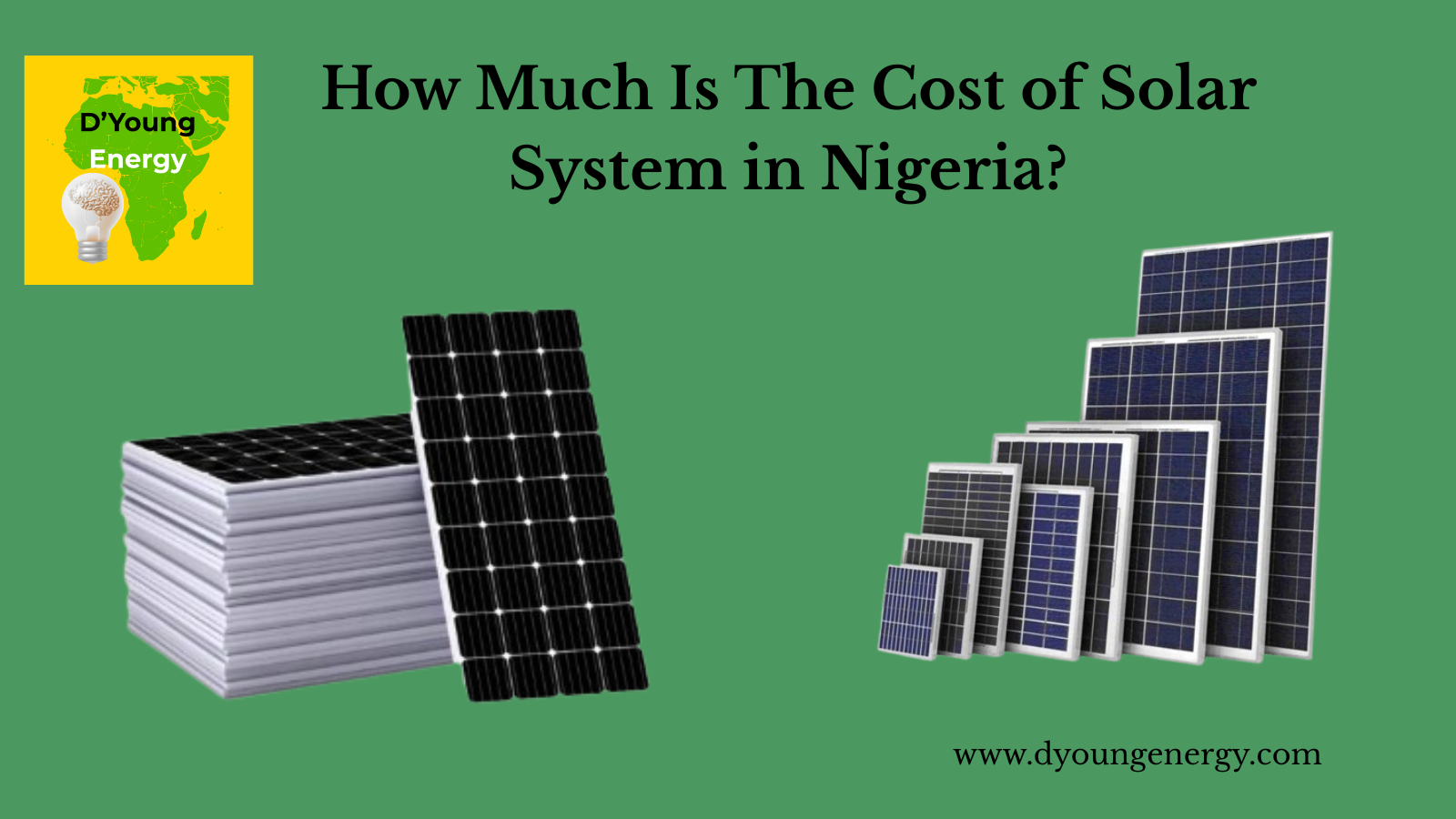
Monocrystalline panels are the most commonly used and sold solar panels in Nigeria today. These are the black-colored panels with a square wafer look. You mostly see them on rooftops in homes, offices, schools, churches, and businesses.They are made from high-quality single-crystal silicon and are among the most efficient solar panels available.
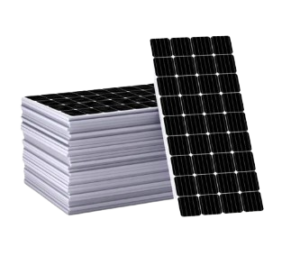
Why Monocrystalline Panels Are Popular in Nigeria
There are several reasons Nigerians prefer monocrystalline panels.
1. Better Efficiency
Monocrystalline panels have high efficiency levels, usually around 15–22%. This means:
- they generate more electricity.
- using less roof space.
This is very important in Nigeria, where many homes have limited roof space and people want maximum output from fewer panels. For example a smaller number of monocrystalline panels can produce the same power that would require more polycrystalline panels.
2. Better Performance During Cloudy Weather
Although Nigeria has plenty of sunlight, weather conditions still change. Monocrystalline panels tend to perform slightly better in the following:
- hazy weather,
- low-light conditions,
- and partial shading.
This helps improve energy production during rainy seasons.
3. Cleaner and More Modern Appearance
Monocrystalline panels usually have the following:
- a uniform black color,
- sleek design,
- and premium appearance.
Many Nigerian homeowners prefer them because they look more modern and attractive on rooftops.
4. Long Lifespan
Most quality monocrystalline panels come with:
- 25-year warranties,
- and can last even longer if properly maintained.
For Nigerians investing heavily in solar, durability matters.
5. Better Value Long-Term
Although monocrystalline panels are more expensive initially, they usually provide better long-term value because:
- they last longer,
- generate more electricity,
- and require fewer panels.
This makes them very suitable for residential solar systems in Nigeria.
2. Polycrystalline Solar Panels
Polycrystalline panels are also common but less popular than monocrystalline in Nigeria today. When compared to monocrystalline, they have slightly better performance in warmer conditions.
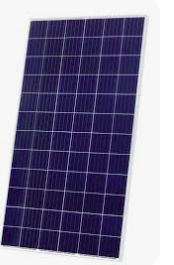
Advantages of Polycrystalline Solar Panels
They usually have:
- a blue appearance,
- lower efficiency between 15-18%
- and slightly lower price than monocrystalline
- excellent lifespans.
- decent performance.
Disadvantages of Polycrystalline Solar Panels
They require:
- more roof space,
- more mounting structure,
- and sometimes more panels to achieve the same output.
For many Nigerian homes with limited roofing area, this becomes a challenge.
3. Thin-Film (Amorphous) Solar Panels
Thin-film solar panels are the least common in Nigeria. They are lightweight, flexible, and have optimal performance in hot climates, but they have lower efficiency levels of about 4–8%.
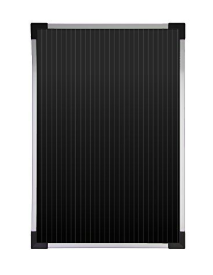
Why Thin-Film Panels Are Rare in Nigeria
Although they perform well in extreme heat and partial shading, they are not ideal for most Nigerian homes because:
- They require too much space to generate useful power.
- produce lower power,
- and are not practical for standard residential rooftops.
They are more suitable for:
- portable systems,
- mobile applications,
- caravans,
- and specialized commercial projects.
What to Look for When Buying Solar Panels in Nigeria
Before buying solar panels, check:
1. Warranty
Good panels should have long-term performance warranties. A good quality crystalline solar panel can last more than 20 years.
2. Brand Reputation
Buy from trusted solar suppliers such as Canadian solar panels, Bestcom solar panaels, Jinko solar panels etc.
3. Tempered Glass
Strong tempered glass protects the panel from damage.
4. A Label On The Back Of The Solar Panel
The label indicates the rating or output power (W) of the solar panel; this can be achieve under ideal conditions, that is, when the sun has a radiation power of 1 kW/m² (at noon, no clouds) and at a panel temperature of 25°C. The label indicates the Power Pmax, Operating current Imp, Operating voltage Vmp, Voltage without load Voc, and Short-circuit current Isc.
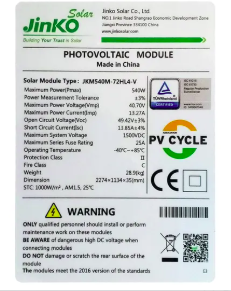
5. Measure The Solar Panel Parameters
Before buying a solar panel, ensure it is tested to meets the required standards. There are two important parameters to be considered during testing:
- The short-circuit current (Isc) is the current measured when the solar panel terminals (positive and negative) are connected together and there is no load.
- The open-circuit voltage (Voc) is the voltage across the negative and positive terminals of the solar panel when it is not connected to any load.
Solar panels are the foundation of every solar energy system. But not all panels are the same.
For Nigerian homes and businesses, monocrystalline solar panels remain the preferred choice. If you are transitioning from generator to solar, don’t just focus on buying “cheap panels.” What to Look for When Buying Solar Panels also requires you focus on quality, efficiency, durability, and professional installation, because a good solar panel investment can power your home reliably for many years.
At D’Young Energy, we help homes and businesses carry out professional installation and design the right solar solution for their needs. Reach out to us today for your Solar System Installation service today. Call +2347037179294